Cryptography Under Siege: How MD5's Fall Foreshadows a Quantum Computing Threat
The Warning Shot from 2010
In the early 2010s, a sophisticated piece of malware known as Flame sent shockwaves through the cybersecurity world. This advanced persistent threat (APT) hijacked Microsoft's update distribution system—a mechanism trusted by billions of Windows users worldwide. The attack, reportedly a joint operation between the US and Israel, injected a malicious update into a network controlled by the Iranian government. The consequences could have been catastrophic had the attack been deployed on a larger scale.

The MD5 Collision Exploit
The key to Flame's success was a collision attack on MD5, a cryptographic hash function Microsoft used to authenticate digital certificates. By generating two distinct inputs that produced an identical MD5 hash, the attackers forged a digital signature that tricked Microsoft's certificate validation system. This allowed them to create a fake, yet cryptographically perfect, certificate for their malicious update server. As a result, the malware pushed a seemingly legitimate update onto target systems without raising any alarms.
While MD5's vulnerability to collisions had been publicly known since 2004, the exploit demonstrated just how dangerous theoretical weaknesses could become in practice. The Flame attack serves as a stark reminder that cryptographic flaws are not merely academic—they can be weaponized with devastating effect.
The Looming Quantum Threat
Today, the cryptographic community is facing a similar but far larger challenge. The algorithms that underpin modern digital security—RSA and Elliptic Curve Cryptography (ECC)—are on a collision course with the rise of quantum computing. This impending disruption is often referred to as "Q-Day"—the point at which a sufficiently powerful quantum computer can break these encryption schemes.
Why RSA and ECC Are Vulnerable
RSA and ECC rely on the mathematical difficulty of factoring large prime numbers or solving discrete logarithm problems. Classical computers would take billions of years to crack these codes. However, a quantum computer running Shor's algorithm could solve these problems in hours or even minutes. The implications are staggering: every encrypted communication, digital signature, and secure transaction could become readable. Banks, governments, and private communications would all be exposed.
As Big Tech giants like Google, Microsoft, and IBM push forward with quantum hardware development, the question is no longer if Q-Day will arrive, but when. Estimates range from 10 to 30 years, but the pace of quantum advancements suggests we must act soon.
Lessons from MD5: The Race for Post-Quantum Cryptography
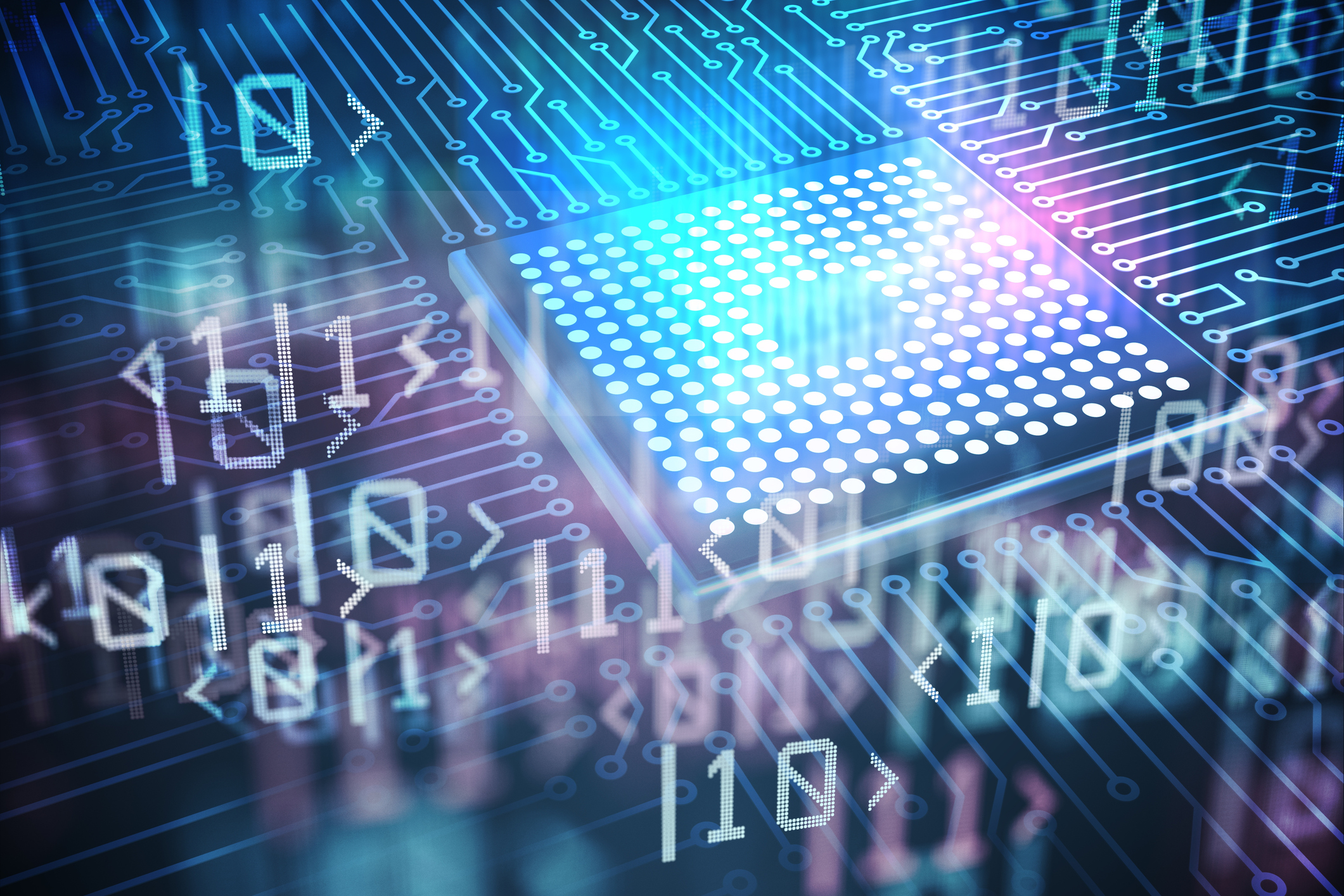
The Flame attack taught us that waiting until a vulnerability is exploited is too late. Similarly, transitioning the global cryptography infrastructure to resist quantum attacks will take years—possibly decades. That's why the National Institute of Standards and Technology (NIST) has been leading an international effort to standardize post-quantum cryptographic algorithms. These new algorithms are designed to withstand attacks from both classical and quantum computers.
Current Progress and Challenges
In 2024, NIST selected the first group of algorithms for standardization, including CRYSTALS-Kyber for encryption and CRYSTALS-Dilithium for digital signatures. Tech companies are already testing these algorithms in real-world environments:
- Google has experimented with post-quantum signatures in its Chrome browser.
- Cloudflare is testing hybrid TLS handshakes that combine classical and post-quantum key exchanges.
- IBM has integrated Kyber into its quantum-safe cryptography library.
Yet challenges remain. Post-quantum algorithms often require larger key sizes and more computational power, making them slower for high-throughput systems. Moreover, the migration must be seamless to avoid breaking existing services. Organizations must also ensure that their data encrypted today—if recorded by adversaries—will not be decrypted later once quantum computers mature. This is known as the "harvest now, decrypt later" threat.
Preparing for Q-Day
The path forward requires a multi-pronged strategy:
- Crypto-agility: Systems should be designed to easily swap out cryptographic algorithms as new standards emerge.
- Hybrid approaches: Deploying both classical and post-quantum algorithms together provides a safety net during the transition.
- Continuous monitoring: As quantum research advances, cryptographers must keep refining their defenses.
The Flame attack of 2010 was a wake-up call that cryptographic assumptions can crumble overnight. Now, the entire digital world faces a similar but more profound disruption. The clock is ticking, and the lessons from MD5's fall are more relevant than ever.
For a deeper dive into the MD5 collision exploit, see our earlier section. To understand the current state of quantum computing threats, refer to the analysis on RSA and ECC vulnerabilities.