Unlocking the Frozen Past: DNA Reveals Four More Franklin Expedition Crew
In a remarkable fusion of history and forensic science, archaeologists continue to employ DNA analysis to identify the remains of sailors from Sir John Franklin's ill-fated 1846 Arctic expedition. Recent findings, detailed in two new scientific papers, have added four more names to the list of known crew members. This ongoing research sheds fresh light on one of exploration's greatest tragedies, where all 129 men perished after their ships became trapped in ice. Below, we explore the key questions surrounding these discoveries and the expedition itself. Jump to the first question.
What was the Franklin Expedition and why did it end in disaster?
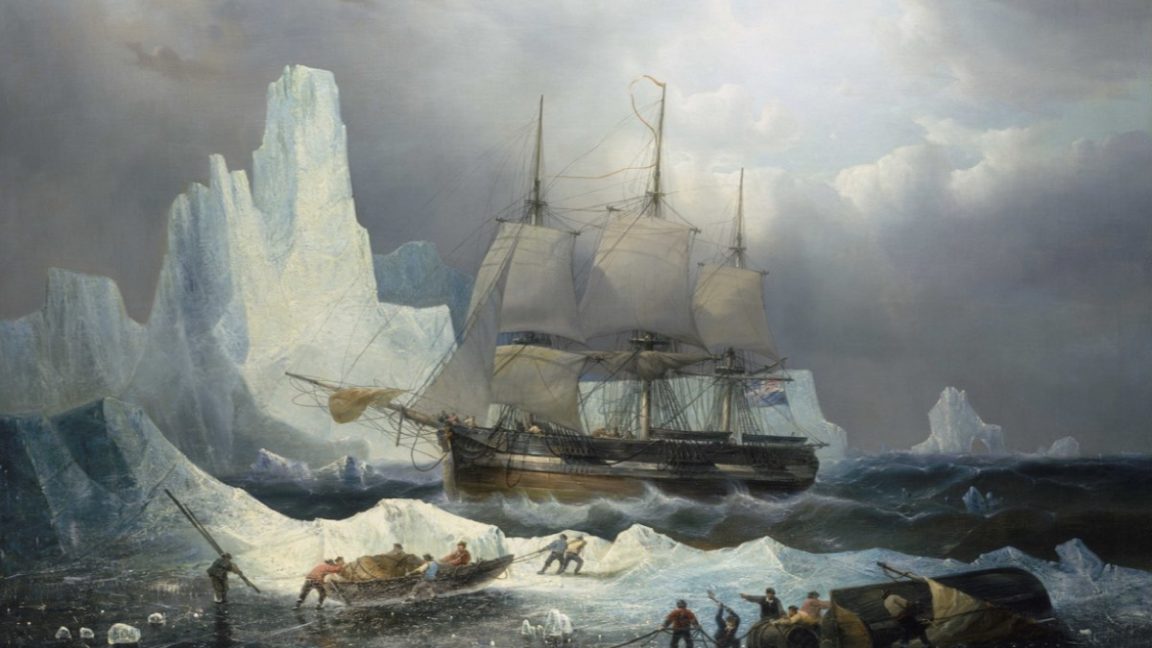
The Franklin Expedition, led by Captain Sir John Franklin, set sail from England on May 19, 1845, with the goal of crossing the Northwest Passage through the Canadian Arctic. The two ships, HMS Erebus and HMS Terror, were last sighted by whalers in July 1845 near Baffin Bay. After wintering on Beechey Island, the expedition became icebound in the Victoria Strait off King William Island in September 1846. Trapped and unable to move, the crew faced extreme cold, scurvy, starvation, and lead poisoning. Franklin himself died on June 11, 1847. The surviving 105 men eventually abandoned the ships, but all perished while trying to walk to safety or during subsequent winters. The disaster is one of the most haunting mysteries in Arctic exploration.
How many crew members have been identified through DNA analysis?
As of the latest studies published in the Journal of Archaeological Science and the Polar Record, a total of nine crew members have been identified by name using DNA extracted from skeletal remains. This includes the four newly identified individuals. The DNA is compared to living descendants of the expedition members, who have volunteered samples. The analysis helps match fragmented bones found at various sites on King William Island and along the rescue routes. Each identification adds a personal story to the broader narrative, enabling historians to trace the final movements of specific sailors.
Who are the four newly identified crew members?
The four newly identified men are: John Gregory (engineer), James Reid (able seaman), John Handford (cook), and John Bates (gunroom steward). These individuals served aboard HMS Erebus or HMS Terror. Their remains were found at a site known as NgLj-7 on King William Island, where a group of men likely died while attempting to reach a trading post. The identifications were made possible through collaboration with descendants who provided cheek swabs or other DNA reference samples. Notably, the DNA analysis also confirmed that some crew members resorted to cannibalism in their final desperate days.
What role did Captain James Fitzjames play after Franklin's death?
After Franklin died in June 1847, Captain James Fitzjames of HMS Erebus assumed overall command. He was a highly experienced Royal Navy officer. Fitzjames left a signed note dated April 1848 stating that 105 survivors had abandoned the ships. He led the desperate trek southward across the barren ice and land, hoping to reach a Hudson's Bay Company outpost. However, he and the others succumbed to exposure, starvation, or disease. Fitzjames' own remains have not yet been positively identified, but his leadership in the final chapter is well documented. His note remains a key primary source for understanding the expedition's fate.
How does DNA analysis help archaeologists identify remains from old expeditions?
Archaeologists extract DNA from teeth or bones, then sequence specific genetic markers, often mitochondrial or Y-chromosomal DNA. These markers are compared with DNA from known descendants of the deceased. Since genealogical records for the Franklin crew exist, families have been traced over generations. For example, a great-great-grandson might provide a match. The process requires careful handling to avoid contamination and often uses next-generation sequencing for degraded samples. When a match is found, it confirms the identity of the individual with high probability. This technique has revolutionized historical archaeology, allowing names to be put to anonymous skeletons and offering closure to descendants.
What have the two new scientific papers revealed about the expedition?
The papers—one in the Journal of Archaeological Science and the other in the Polar Record—present the DNA evidence for the four new identifications. They also provide osteological analyses, showing signs of malnutrition, scurvy, and in some cases, cut marks consistent with cannibalism. The research highlights the value of integrating genetics with archaeology and oral history from Inuit communities. Additionally, the papers discuss the site distribution of remains and how the men died in clusters. These studies deepen our understanding of the crew's final days and the physical hardships they endured.
For further reading, see the original articles in the Journal of Archaeological Science and Polar Record.