Designing Next-Generation Mars Helicopters: A Technical Guide for Aspiring Engineers
Overview
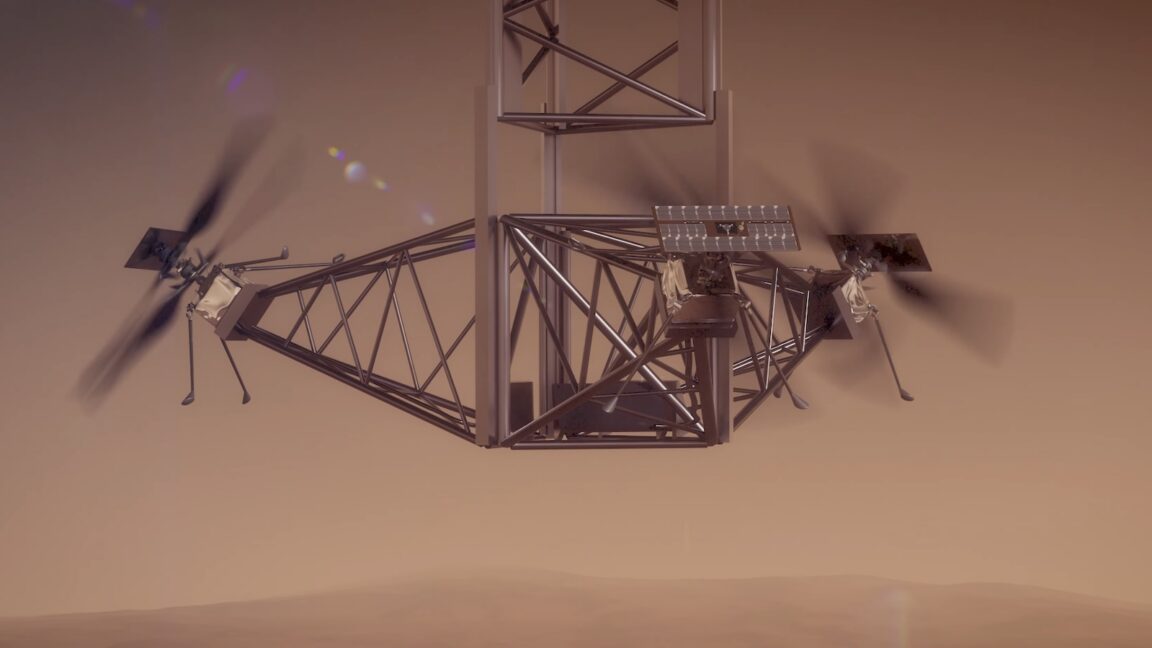
Since NASA's Ingenuity helicopter completed its historic mission on Mars — making 72 flights against an original goal of just five over 30 days — engineers at the Jet Propulsion Laboratory (JPL) have turned their attention to building larger, more capable rotorcraft for the Red Planet. These next-generation Martian helicopters are designed to carry heavier payloads over greater distances, navigating the planet's thin atmosphere (about 1% of Earth's density). The goal is to unlock a new paradigm for planetary exploration: using rotorcraft to reach terrain inaccessible to rovers and to scout ahead for future crewed missions. This guide walks through the key technical challenges, design decisions, and engineering steps required to build a robust Mars helicopter, drawing lessons from Ingenuity and looking ahead to the SkyFall mission (slated for launch as early as late 2028, riding the nuclear-powered Space Reactor-1 spacecraft).
Prerequisites
Before diving into the design process, you should have a solid grasp of:
- Fundamentals of rotorcraft aerodynamics (lift, drag, blade element theory)
- Properties of the Martian atmosphere (composition, density, temperature variations)
- Basic electrical and mechanical engineering principles (power systems, materials science, structural analysis)
- Familiarity with simulation tools (CFD, structural FEA) and embedded systems programming (C/C++, Python for control algorithms)
No prior experience with planetary exploration is required, but a willingness to think beyond Earth-bound design paradigms is essential.
Step-by-Step Design and Implementation
Step 1: Understand the Martian Environment
Mars' atmosphere is about 0.6% as dense as Earth's at sea level, with an average surface pressure of 600 Pa. Temperature can swing from -100°C at night to 0°C during the day. Dust storms can reduce visibility and coat surfaces. For a rotorcraft, low density means you need much larger rotor diameters or higher rotational speeds to generate sufficient lift. The speed of sound on Mars is lower (~240 m/s vs. 340 m/s on Earth) so compressibility effects become critical at modest rotor tip speeds. Use environmental data from NASA's Mars Climate Sounder to model realistic conditions in your simulations.
Step 2: Rotor Design – Size and Speed Trade-Offs
Ingenuity used two counter-rotating blades with a diameter of 1.2 m, spinning at around 2400 rpm. For a larger rotorcraft (target payload: 5–10 kg, range: 2–5 km per flight), you'll need even larger rotors (4–6 m diameter) or higher rpm. However, keeping tip speeds subsonic (Mach < 0.85) is crucial to avoid shock waves and excessive drag. Compute blade area and twist distribution using the momentum theory: Lift = (1/2) * rho * V^2 * Cl * A, where rho is Martian air density (~0.02 kg/m³ at surface). Then iterate with CFD to optimize airfoil shapes — thin, highly cambered sections work well at low Reynolds numbers. A good starting point is an S-series airfoil (e.g., S1223) modified for low Re.
Step 3: Choose Lightweight, Durable Materials
Every gram counts when launching from Earth. Carbon-fiber-reinforced polymers (CFRP) are standard for blades and fuselage, as on Ingenuity. For next-gen craft, consider hybrid composites (carbon/Kevlar) for impact resistance. The skin must withstand dust abrasion and thermal cycling. Use aluminum-lithium alloys for structural ribs. Remember to include shielding against cosmic radiation for sensitive electronics — a 2 mm thick aluminum enclosure can reduce dose by 50%. Test materials in a thermal vacuum chamber cycling between -120°C and +50°C.
Step 4: Power System Sizing
Ingenuity relied on solar panels charging lithium-ion batteries. For longer flights and heavier payloads, solar alone may be insufficient, especially at higher latitudes. The SkyFall mission will use a nuclear-powered spacecraft (SR-1) as a mothership, but the helicopter itself needs an onboard power source. Consider a radioisotope thermoelectric generator (RTG) or a small fuel cell — but both add mass. A practical baseline: use high-specific-energy Li-ion cells (300 Wh/kg) and a 2 m² solar array with 30% efficiency. Model the power budget: hover power for a 50 kg craft at Mars is roughly 500 W; cruise requires 200 W. Ensure batteries can deliver burst power for landing and obstacle avoidance.
Step 5: Control and Navigation Systems
Autonomous flight is mandatory given the 4–24 minute communication delay to Earth. Use a combination of inertial measurement units (IMU), stereo cameras for visual odometry, and a laser altimeter. Process SLAM algorithms onboard (e.g., ORB-SLAM3) to map terrain in real time. The flight computer should run a real-time operating system (FreeRTOS) with triple redundancy. Write control laws in Python using the ROS 2 framework for ease of prototyping, then port to C++ for flight. Test the full stack in a simulation environment like Gazebo with a Mars gravity plugin (-3.72 m/s²). Below is an example snippet for attitude control:
# Pseudo-code for roll axis controller
desired_roll = (desired_lateral_accel - current_lateral_accel) * k_p
roll_torque = desired_roll * moment_of_inertia
motor_mix = control_allocator(roll_torque, pitch_torque, yaw_torque, thrust)
Step 6: Test, Test, Test – Earth-Based Validation
You cannot test in actual Mars conditions on Earth, but you can approximate them. Use a vacuum chamber set to 600 Pa, with a helium-nitrogen mixture to match density. Mount the rotorcraft on a gimbal to simulate Mars gravity. Conduct hover tests for at least 100 hours cumulative. Perform blade fatigue testing to 10^7 cycles. Also test dust tolerance: blow fine silica (particle size 10–50 µm) at the craft while spinning rotors; measure erosion and performance degradation. Document all failures; they are your best teachers.
Common Mistakes to Avoid
- Overlooking Reynolds number effects: Martian air's low density leads to Reynolds numbers below 50,000 for typical blades. Standard airfoils stall easily at such low Re; use specialized low-Re airfoils and test them in a low-pressure wind tunnel.
- Underestimating thermal extremes: Electronics can freeze or overheat. Use heaters for the battery (maintain above -20°C) and radiators for motor controllers. Insulate avionics with aerogel blankets.
- Neglecting dust impact: Fine dust can abrade blade leading edges and clog solar panels. Apply hydrophobic coatings and design blades with replaceable leading edge covers.
- Incorrect communication antenna placement: The rotorcraft must relay data via an orbiting satellite (like the Mars Reconnaissance Orbiter) or a lander. Ensure the antenna has a clear field of view when the craft is on the surface, not blocked by rotors.
Summary
Designing a Martian helicopter is a multidisciplinary challenge that pushes the boundaries of aerospace engineering. By understanding the unique environment — thin atmosphere, extreme temperatures, low gravity — and applying rigorous iterative design (rotor size, materials, power, autonomy), you can replicate the success of Ingenuity and go further. The next generation of rotorcraft, exemplified by the SkyFall mission, will open up vast regions of Mars to detailed exploration. Stay curious, test relentlessly, and remember that every small innovation on Earth can lead to giant leaps on the Red Planet.