Decoding the Twisted Jaw of Tanyka amnicola: A Paleontologist's Guide to Prehistoric Anomalies
Overview
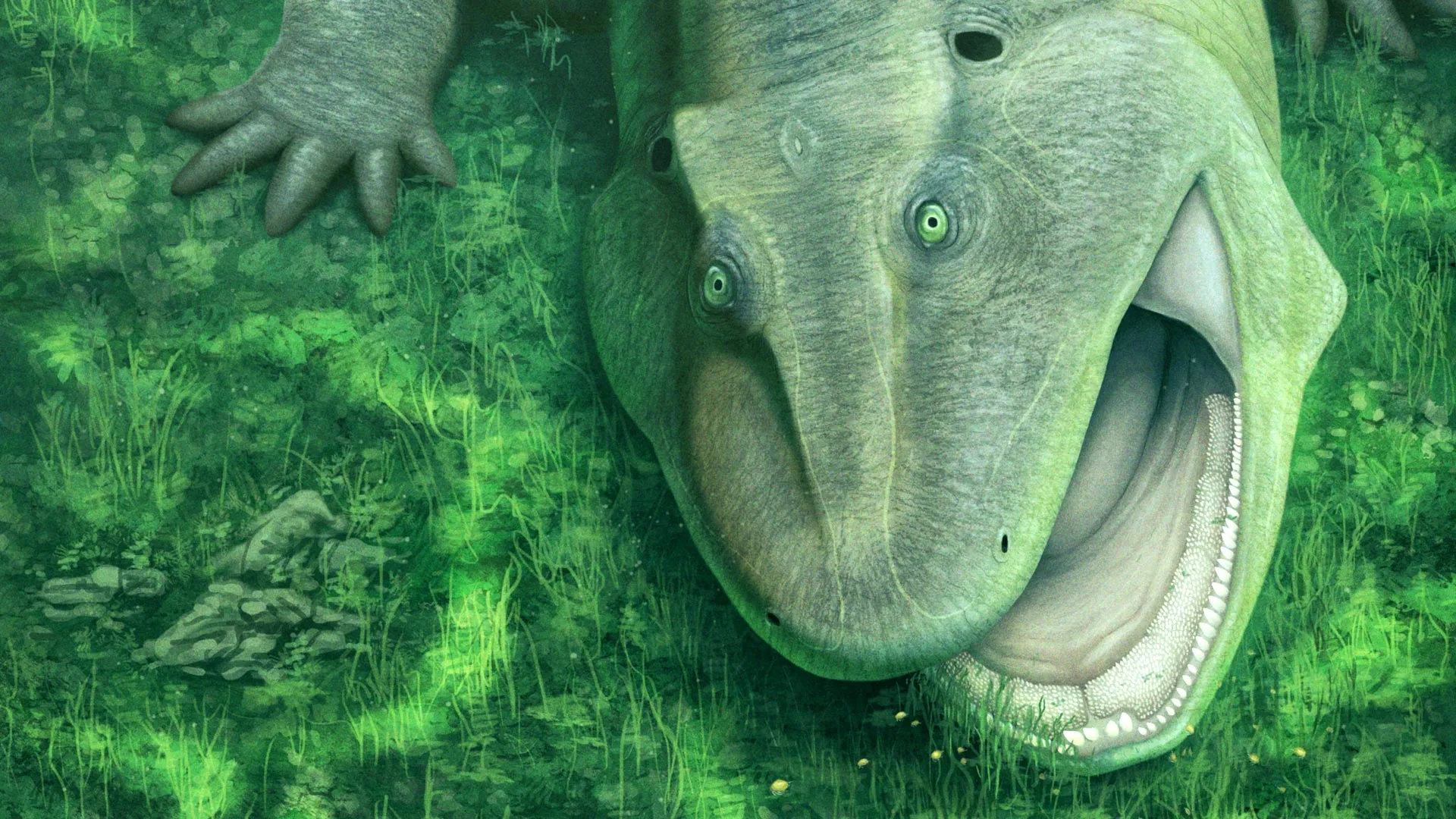
In the arid bed of a long-dry river in Brazil, paleontologists unearthed a puzzle that challenges our understanding of prehistoric life: the twisted jawbones of a creature named Tanyka amnicola. This 275-million-year-old fossil belongs to an ancient lineage that, by all rights, should have vanished much earlier—making it a true 'living fossil' of its time. Its most striking feature is a jaw morphology unlike anything alive today, twisting in ways that hint at unique feeding mechanics or evolutionary dead ends. This guide takes you through the scientific process of discovering, analyzing, and interpreting such a bizarre fossil, from field excavation to phylogenetic placement. Whether you're a budding paleontologist or a curious enthusiast, you'll learn the steps needed to decode this twisted enigma and appreciate its significance in Earth's deep history.
Prerequisites
Before diving into the study of Tanyka amnicola, ensure you have the following background knowledge and tools:
- Basic paleontological principles: Familiarity with fossil formation (taphonomy), geological time scales, and vertebrate anatomy.
- Access to comparative collections: Either physical museum specimens or high-resolution digital databases (e.g., MorphoSource) of early tetrapods and temnospondyls.
- CT scanning or 3D modeling software: Tools like Avizo, Mimics, or even free alternatives (e.g., Slicer) for visualizing internal bone structure.
- Phylogenetic analysis software: PAUP*, MrBayes, or TNT for reconstructing evolutionary relationships.
- Field equipment (if simulating fieldwork): GPS, rock hammer, plaster for jackets, and careful excavation tools.
- A copy of the original publication: The paper describing Tanyka amnicola (see references) for detailed measurements and context.
Step-by-Step Guide to Analyzing the Twisted Jaw
Step 1: Locate and Contextualize the Fossil Site
In the original discovery, researchers identified the fossil within a dried-up riverbed in Brazil. To replicate this process, start by studying geological maps of the Paraná Basin or similar Permian deposits. Look for sedimentary rocks dating to around 275 million years ago (Middle Permian). Use satellite imagery to spot outcrops that might indicate ancient river channels. Once on site, document the stratigraphy: note the grain size, bedding planes, and any associated plant or invertebrate fossils that provide environmental clues. For Tanyka amnicola, the riverbed context suggests a freshwater or near-shore habitat, which helps infer its ecology.
Step 2: Excavate Carefully to Preserve Jaw Integrity
The twisted jawbone is delicate—any mishandling can break the unique curvature. Use dental picks and brushes to expose the bone matrix. If the fossil is partially embedded, apply a consolidant (like Butvar B-76) to stabilize cracks. Photograph each stage with a scale bar and orientation marker. Wrap the surrounding rock in plaster jackets for safe transport. In the lab, remove the jacket and prepare the specimen under a microscope. For Tanyka amnicola, the twist is most prominent in the lower jaw (dentary and articular regions), so note any asymmetries between left and right sides.
Step 3: Perform CT Scanning for Internal Morphology
To see the full extent of the twist without damaging the fossil, use computed tomography (CT) scanning at a resolution of at least 50 microns. Process the scan data in your 3D software. Create a surface model and examine the cross-sections. Look for features like the Meckelian canal (for nerves and blood vessels) and dental lamina. In Tanyka amnicola, the twist causes the tooth row to spiral, so measure the angle of rotation along the jaw axis. Export the model as an STL file for further analysis.
Step 4: Compare with Known Prehistoric and Modern Jaws
Load your 3D model into a comparative framework. Find homologous landmarks (e.g., coronoid process, angular bone) on other early tetrapods like Eryops or Dimetrodon (though the latter is a synapsid, not a close relative). Also look at modern amphibians and reptiles—none have such a pronounced twist, which what makes Tanyka amnicola unique. Perform geometric morphometrics to quantify the shape difference. Your analysis should reveal that the twist likely evolved for a specialized feeding strategy, perhaps a gape-and-suction mechanism for catching elusive prey in murky waters.
Step 5: Reconstruct Phylogenetic Relationships
Using a character matrix containing jaw traits (including twist angle, tooth shape, and bone sutures) from dozens of Permian taxa, run a maximum parsimony or Bayesian analysis. The original paper placed Tanyka amnicola within a relict lineage—suggesting it survived a mass extinction or competitive displacement. Check for support values (bootstrap or posterior probability) to confirm its position. The twisted jaw might be an autapomorphy (unique derived trait) that evolved rapidly, or it could be a reversion to an ancestral state. Create a tree and annotate the branch leading to Tanyka amnicola.
Step 6: Interpret Paleobiology and Extinction Implications
Synthesize all data to answer: How did the twisted jaw function? Compare it to functional models from modern fish with rotated jaws (e.g., cichlids). The twist might have allowed a wider strike zone or a corkscrew bite to grip slippery prey. Also consider why this lineage persisted while others died out. The 'living fossil' status implies that Tanyka amnicola occupied a stable ecological niche untapped by competitors. Finally, write up your conclusions following standard scientific format, including a discussion of taphonomic biases that could exaggerate the twist (e.g., post-mortem deformation—but the original researchers ruled that out via symmetry checks).
Common Mistakes
- Mistaking taphonomic distortion for biological twist: Fossils can be crushed or sheared during burial. Always compare multiple specimens and look for bilateral symmetry. In Tanyka amnicola, both jaws show the same twist, confirming it's natural.
- Overlooking post-cranial evidence: The jaw is remarkable, but don't ignore associated bones (skull roof, vertebrae) that provide context. The original study also examined postcranial remains to confirm the animal's identity.
- Assuming all twisted jaws serve the same function: Each taxon evolves unique adaptations. Avoid applying analogs from unrelated groups without rigorous evidence.
- Misidentifying the geological age: Ensure the 275-million-year date is reliable via radiometric dating or biostratigraphy. Mistaking the horizon could remove the 'living fossil' context.
- Neglecting to publish negative results: If your analysis shows the twist disappears after matrix correction, report that honestly. Null findings are valuable.
Summary
This guide walked through the discovery and analysis of Tanyka amnicola's twisted jaw—a bizarre but real anatomical feature from 275 million years ago. By following steps from fieldwork to phylogeny, you can understand how scientists identified this 'living fossil' and what it tells us about evolutionary resilience. The key takeaway: even in well-studied groups like early tetrapods, nature hides surprises that challenge our assumptions. Always remain curious and rigorous when studying the fossil record.