A Practical Guide to Hunting Asteroids and Transients with the Vera C. Rubin Observatory
Overview
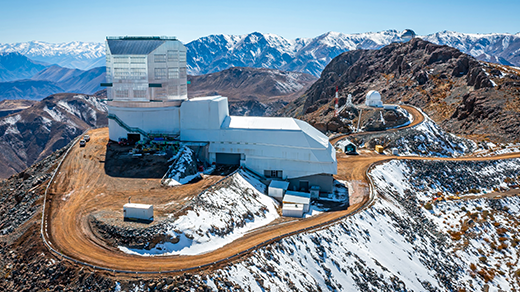
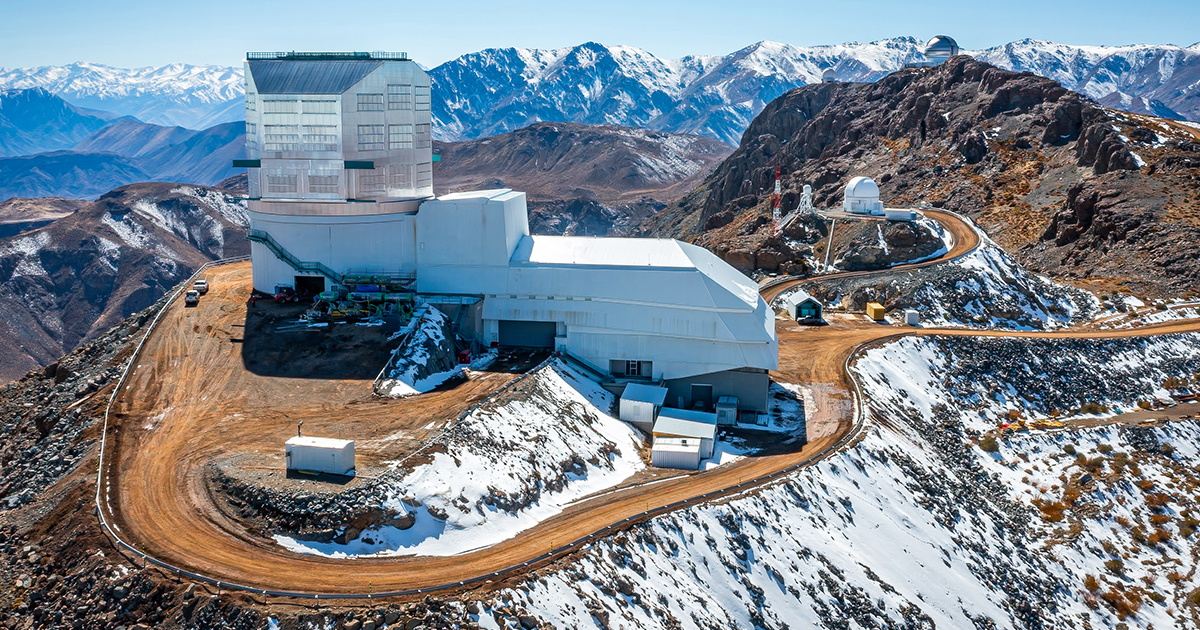
The Vera C. Rubin Observatory, perched high in the Chilean Atacama Desert, is about to revolutionize time-domain astronomy. Originally conceived in the mid-1990s as the Dark Matter Telescope, this facility is now optimized to capture the entire visible sky every few nights for a decade. Its 3.2-gigapixel LSST camera will generate an unprecedented flood of data, enabling scientists to track skyscraper-sized asteroids, detect the faint echoes of failed supernovas, and even spot interstellar visitors whizzing through our solar system. This guide walks you through the practical steps of using Rubin's data for these three specific scientific goals—whether you're a graduate student, a professional astronomer, or an advanced amateur with computational skills.
Prerequisites
Before diving into the methods, ensure you have the following foundational knowledge and tools:
- Astronomy 101: Familiarity with magnitude scales, orbital mechanics (Keplerian elements), and basic classification of supernovae (Type Ia vs. core-collapse).
- Programming Skills: Proficiency in Python (especially with NumPy, pandas, and AstroPy) is essential for handling Rubin’s alert streams and light curves.
- Database Access: An account at the Rubin Science Platform (or similar data archive) to query the LSST alert database and the Solar System Processing pipeline.
- Computing Resources: A machine with at least 16 GB RAM for local processing of alert fluxes; cloud credits are recommended for heavy image cutout downloads.
- Patience: Rubin’s data volume is enormous—be ready to filter millions of alerts nightly.
Step-by-Step Instructions
Step 1: Accessing the Rubin Alert Stream
The LSST camera delivers alerts within 60 seconds of each exposure. To begin, you must connect to the Alert Distribution System (ADS) via a Kafka stream. Rubin provides pre-processed DIASource alerts that include fluxes, positions, and preliminary classifications.
# Example: Confluent Kafka consumer in Python
from confluent_kafka import Consumer
import json

consumer_config = {
    'bootstrap.servers': 'alert-stream.lsst.cloud:9092',
    'group.id': 'asteroid_hunter_001',
    'auto.offset.reset': 'latest'
}
consumer = Consumer(consumer_config)
consumer.subscribe(['lsst.science.diaSource'])

for message in consumer.consume(100, timeout=1.0):
    alert = json.loads(message.value())
    # Process alert ...
Step 2: Filtering for Asteroids vs. Transients
Separate solar system objects from extragalactic transients using the mpcOrbit field or the presence of a known orbit. For asteroids, focus on alerts with a non-zero proper motion and isSolarSystem flag.
Common mistake: Solar system alerts can be confused with fast-moving space debris or cosmic rays. Always check the radial velocity and linked observations from previous nights.
Step 3: Tracking Skyscraper-Sized Asteroids (NEOs)
To identify potentially hazardous asteroids (PHAs) larger than 100 m (the "skyscraper" size), you need to estimate their absolute magnitude (H) and orbit. Follow these substeps:
- Extract light curve from a minimum of three nights of observations to derive rotational phase.
- Calculate H using the standard formula: H = V - 5 log10(Δ * r) where V is apparent magnitude, Δ is distance from Earth, r from Sun.
- Cross-match with known catalogs (NEOWISE) to verify size. Rubin’s g-band fluxes can be converted using an assumed albedo (typically 0.15 for rocky bodies).
- Submit candidate to the Minor Planet Center (MPC) for follow-up. Use the
mpc_observationAPI to format your report.
Step 4: Detecting Failed Supernovas (Non-Luminous Transients)
Failed supernovas (or 'failed core-collapse') are massive stars that collapse directly to a black hole without a brilliant optical display. Rubin’s sensitivity allows catching the sudden disappearance of a red supergiant. Approach:
- Monitor red and infrared filters (i, z, y): A failed SN will show a rapid drop in brightness (2–3 mag) over a few days, unlike typical supernovae.
- Use subtraction images: The LSST pipeline generates
DiffImstamps. Download cutouts around potential candidates. - Rule out dust obscuration: Compare with archival Pan-STARRS data; a real failed SN will not re-brighten in any band.
- Trigger spectroscopy: Automated follow-up with the Gemini Observatory is possible via the Rubin Broker—submit a TriggerObservation JSON.
Prior mistake: Some novae in Andromeda can mimic failed SNe. Always check the host galaxy’s distance modulus.
Step 5: Discovering Interstellar Visitors (like 'Oumuamua)
Interstellar asteroids or comets will show hyperbolic orbits (eccentricity > 1). Rubin detects these as fast-moving streaks in single exposures. Procedure:
- Filter for high apparent proper motion (> 10 arcsec/day) and high eccentricity from orbit fitting.
- Backtrack orbit using the JPL Horizons system to confirm interstellar origin. A negative semi-major axis indicates hyperbolic.
- Assess size and composition using color indices (g−r vs. r−i). Interstellar objects tend to be red like D-type asteroids.
- Trigger rapid-response spectroscopy to search for outgassing or artificial origin.
Step 6: Validation and Publication
Before claiming a new asteroid or transient, always:
- Check for false positives using the LSST Quality Flag (e.g., cosmic-ray likelihood, satellite trails).
- Run a Monte Carlo simulation to confirm detection significance (SNR > 5 in at least three epochs).
- Use the Rubin MAF (Metrics Analysis Framework) to assess cadence coverage for your target.
Common Mistakes and How to Avoid Them
| Mistake | Consequence | Solution |
|---|---|---|
| Mistaking a cosmic-ray hit for an asteroid | False report to MPC | Check the streak morphology; asteroids are elongated in the direction of motion, not perpendicular. |
| Classifying a dim supernova as a 'failed SN' | Missed opportunity for follow-up | Require at least 3 sigma drop without any brightening over 30 days. |
| Ignoring the bias of the solar system processing pipeline | Missed interstellar objects | Run your own orbit fit from raw astrometry using the lsst.sims package. |
Summary
The Vera C. Rubin Observatory will deliver an avalanche of time-domain data, turning every astronomer into a survey scientist. By mastering the alert stream, filtering for moving objects, and applying specific diagnostic tests for asteroids, failed supernovae, and interstellar interlopers, you can contribute to forefront discoveries. This guide provides the essential steps—from Kafka consumers to orbit backtracks—to get started. Remember: Rubin generates millions of alerts per night; your challenge is to separate the needle from the haystack. Good luck, and happy hunting!