Preparing for the Quantum Future: Meta’s Post-Quantum Cryptography Migration Strategy
Understanding the Quantum Threat
Quantum computing promises to revolutionize many fields, but it also poses a grave risk to current cryptographic systems. Researchers agree that within the next decade or two, sufficiently powerful quantum computers will be able to break widely used public-key encryption methods such as RSA and ECC. This vulnerability creates a urgent need for organizations to transition to post-quantum cryptography (PQC) algorithms that can resist both classical and quantum attacks.

One particularly insidious risk is the “store now, decrypt later” (SNDL) strategy, where adversaries collect encrypted data today with the expectation that they will be able to decrypt it once quantum computers become available. This means that even if the quantum threat feels distant, any sensitive data transmitted today could be compromised in the future. As a result, proactive migration to PQC is essential, even for organizations that do not face immediate threats.
Industry Standards and Guidance
Recognizing the urgency, standard bodies like the U.S. National Institute of Standards and Technology (NIST) and the UK’s National Cyber Security Centre (NCSC) have published migration roadmaps. NIST’s first set of PQC standards—ML-KEM (Kyber) for key encapsulation and ML-DSA (Dilithium) for digital signatures—are now finalized, with additional algorithms such as HQC on the way. Notably, Meta’s own cryptographers are co-authors of HQC, underscoring the company’s deep involvement in shaping the future of cryptographic security.
These standards provide organizations with robust, tested tools to defend against SNDL attacks. The NCSC has recommended that critical systems should prioritize PQC protections by 2030, a timeline that reflects both the complexity of migration and the evolving technical landscape. Meta aims to share its own migration experience to help peers move faster and more efficiently.
Meta’s PQC Migration Goals
With billions of daily users relying on platforms like Facebook, Instagram, WhatsApp, and Messenger, Meta has a responsibility to maintain high security and data protection standards. The company has adopted a proactive, multi-year approach to deploying post-quantum encryption across its internal infrastructure. The primary objectives are to protect user data from future quantum decryption and to ensure that Meta’s systems remain trustworthy in a post-quantum world.
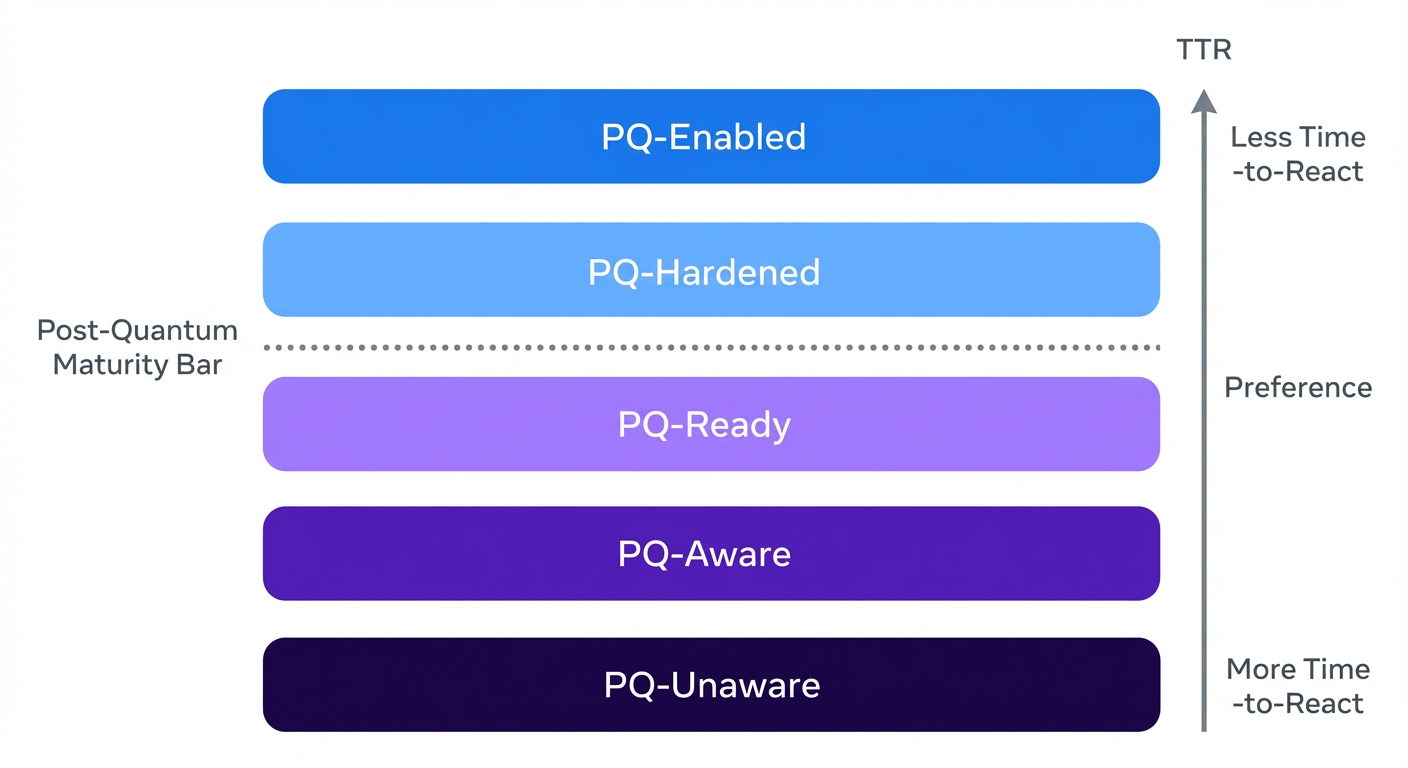
In its published guidance, Meta proposes PQC Migration Levels—a framework that helps teams assess the complexity of migrating various use cases, from simple certificate-based systems to complex protocols. These levels enable organizations to prioritize efforts, allocate resources effectively, and manage the inherent challenges of upgrading cryptography at scale.
Risk Assessment and Inventory
The first step in Meta’s approach is a thorough risk assessment. Teams identify all systems that rely on public-key cryptography and evaluate their exposure to SNDL attacks. This inventory includes not only external-facing services but also internal communications, inter-datacenter traffic, and legacy systems. By classifying systems according to their risk profile—based on data sensitivity, lifespan of secrets, and attack surface—Meta can decide which systems require immediate PQC upgrades and which can be scheduled for later phases.
Gradual Deployment with Guardrails
Rather than a sudden “big bang” switchover, Meta follows a gradual deployment strategy. New PQC algorithms are introduced alongside existing ones, typically using hybrid modes (e.g., combining Kyber with a classical key exchange) to ensure compatibility and avoid breaking connectivity. This phased approach allows engineers to monitor performance, fix interoperability issues, and validate security before removing legacy support.
Guardrails are put in place to prevent accidental misconfiguration or regression. For instance, automated testing scripts verify that PQC implementations meet performance benchmarks and that fallback mechanisms work correctly. These guardrails are continuously updated as deployment progresses across different services and geographies.
Lessons Learned and Practical Takeaways
Meta’s migration journey has yielded several actionable insights for other organizations:
- Start early. Even if full quantum capability is years away, the migration process itself takes time—sometimes years—due to the need for testing, coordination, and standardization updates.
- Build a comprehensive inventory. You cannot protect what you do not know. A detailed map of cryptographic dependencies is indispensable.
- Use hybrid schemes. Combining classical and post-quantum algorithms provides a safety net during the transition period.
- Engage with standards bodies. Active participation helps shape future algorithms and ensures your organization stays ahead of emerging requirements.
- Communicate across teams. PQC migration affects security, networking, software development, and operations. Cross-functional collaboration is essential.
Conclusion
The transition to post-quantum cryptography is not just a security upgrade—it is an imperative for any organization that values long-term confidentiality. Meta’s experience demonstrates that with careful planning, risk-driven prioritization, and gradual deployment, it is possible to navigate this complex change effectively and economically. By sharing its framework, migration levels, and lessons, Meta hopes to accelerate the broader industry’s move toward a post-quantum secure future.